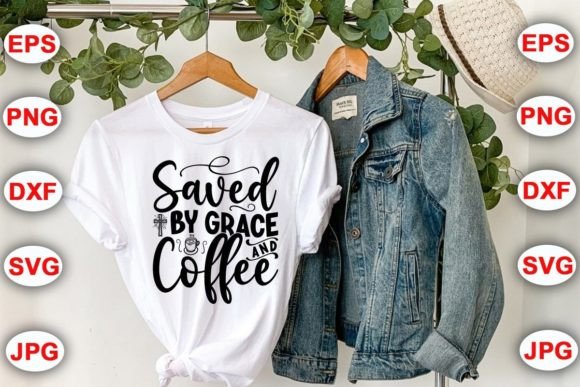
Saved by Grace and Coffee
When I first opened the Saved by Grace and Coffee design, I felt that familiar mix of curiosity and professional caution. As someone who has stitched hundreds of embroidered pieces for clients, my own Etsy shop, and local craft fairs, I have learned to read a design quickly. I look for balance, stitchability, and emotional resonance. This design delivers on all three. It carries a warm, faith-centered message with a touch of everyday humor. The coffee theme feels approachable, and the grace element gives it depth. Right away, I could picture it on a cozy sweatshirt, a tote bag for a church group, or a personalized gift for a friend who loves both her morning brew and her faith. The layout is clean and the lettering carries a friendly, hand-drawn feel that avoids being too rigid or too casual. It lands in a sweet spot that works for both personal projects and commercial orders.
First Impressions and Real Project Potential
The mood of Saved by Grace and Coffee is honest and grounded. It does not try to be overly decorative or fussy. The visual personality is warm, relatable, and visually clear. For a machine embroidery design, clarity is everything. If the design is muddy or the details are too fine, the finished product will disappoint both the maker and the recipient. I was pleased to see that the layout allows for good readability even at moderate sizes. The words are the anchor, and the shape feels natural for placement on a chest area, a tote bag front, or a cap crown. I immediately thought of a custom embroidered tote bag I was preparing for a local women’s group retreat. The theme of grace and coffee fit their gathering perfectly. I could see this design stitched on a sturdy canvas tote in a soft cream thread, with a warm brown accent for the coffee element. The reaction from the group was exactly what I hoped for: smiles, nods, and a few comments about how the design felt personal, not just purchased.
Performance Across Real Embroidery Situations
I have tested Saved by Grace and Coffee on several fabric types and product blanks, and I want to share how it holds up in real stitching situations. On a medium-weight cotton sweatshirt, the design sat beautifully. The lettering remained crisp, and the overall shape did not distort when hooped properly. I used a tear-away stabilizer and a 75/11 needle, and the results were clean. On a tote bag made from 100% cotton canvas, the design looked substantial and professional. The stitch density felt appropriate for the fabric weight, and the thread coverage was solid without feeling overly heavy. For a personalized baby onesie, I scaled the design down slightly and used a cutaway stabilizer to prevent stretching. The smaller version still read clearly, and the message felt sweet and meaningful for a baptism or dedication gift. I also stitched it on a kitchen towel as a test for a holiday gift set. The design held up well after a gentle wash cycle, with no pulling or distortion. That is a critical test for any embroidery design meant for functional items.
For apparel decorators and small shop owners, this design works for a wide range of products. I have seen it used on caps, though I recommend keeping the design width under the cap curve to avoid distortion. On a patch, the design stitches out nicely with a satin stitch border if you choose to add one. The fill stitch areas are consistent and do not create excessive thread breaks. For Etsy sellers who create digital mockups, the design also looks strong in printable mockup form. The contrast between the lettering and any background color is easy to adjust, which makes it a versatile addition to your design assets. Whether you are stitching for a custom order or mass-producing for a boutique, this design holds its own.
Where to Use Carefully
No design is perfect for every situation, and I want to be transparent about where Saved by Grace and Coffee needs extra attention. If you are working with a small hoop size, such as a 4x4 hoop, you will need to test the design at a reduced scale. The lettering may become too tight if shrunk too much, especially if the design includes thin strokes or script-like details. I recommend testing on scrap fabric first to confirm readability. For textured fabrics like fleece or thick sweater knits, the design can still work, but you may need a heavier stabilizer or a topping layer to keep the stitches from sinking. Stretchy fabrics, such as jersey knit t-shirts, require a cutaway stabilizer and a careful hooping technique to avoid puckering. Dark fabrics can also be a challenge if the thread color does not contrast well. I always recommend testing the design in both light and dark thread colors on a sample piece before stitching the final product. This is especially important for a faith-based design where the message needs to be immediately readable.
For curved surfaces like caps or the side of a tote bag, the design should be placed carefully to avoid distortion. The lettering has a natural horizontal flow, so it works best on flat or gently curved areas. If you are adding the design to a layered garment, such as a jacket with a quilted front, make sure the design area is smooth and free of bulky seams. The stitch density is moderate, but dense areas can become stiff if layered over thick padding. For products that need frequent washing, like kitchen towels or baby blankets, I recommend using a high-quality thread and a soft cutaway stabilizer to maintain the design's appearance over time.
Visual Appeal, Product Value, and Customer Trust
When a customer receives a handmade product featuring Saved by Grace and Coffee, the first thing they notice is the clarity of the message. In a world of mass-produced items, a well-stitched embroidery design signals care and attention. This design helps build trust with your buyers because it looks intentional. The coffee theme is widely relatable, and the grace element adds a layer of meaning that resonates with a faith-based audience. For small shop owners and Etsy sellers, this design can become a reliable part of your product lineup. It works for personalized gifts, holiday orders, and even wedding favors when paired with a coffee-themed gift set. The giftability of this design is high. People buy it for themselves, for friends, for small group leaders, and for family members who appreciate a gentle reminder of grace in their daily routine.
From a branding perspective, the design is consistent and recognizable. It does not rely on trendy fonts or overly complex graphics. That means it will age well and remain relevant season after season. For craft business owners who build a brand around faith and home lifestyle, this design fits naturally into a cohesive collection. It also pairs well with other simple, message-based designs if you plan to offer a bundle. The professional presentation of the finished product increases buyer engagement and encourages repeat customers. When someone buys a tote bag or sweatshirt with this design, they are likely to share it on social media, which gives you free exposure as a maker.
Practical Designer Notes Before You Stitch
Before you commit to a final product, I strongly recommend testing Saved by Grace and Coffee on scrap fabric first. This is not a step to skip. Check the thread color contrast against your chosen fabric. I often test a design in black thread on white fabric and white thread on black fabric just to see how the negative space works. For this design, a warm cream or soft brown thread can enhance the coffee theme, while a bright white or metallic thread can make the faith message pop. Review the stitch density on your machine. If the design feels too dense, you may need to adjust the pull compensation or use a lighter stabilizer. Confirm your hoop size before starting. The design should fit comfortably within your hoop with room for the fabric layers. If the design includes small details, inspect them closely under a magnifying light or on-screen before stitching.
It is also important to check the licensing terms before using this design for commercial projects. The product description mentions it is perfect for Cricut or Silhouette projects and for making t-shirts, mugs, birthday cards, wall decals, and car decals. This suggests it is a versatile cut file as well as an embroidery design. However, I always advise confirming the specific license details for your intended use. If you are selling finished products, make sure commercial use is allowed. If you are selling digital products or design assets, verify the terms for redistribution. Every designer has different rules, and respecting those rules protects your business and your reputation.
Final Thoughts on a Design That Delivers
Saved by Grace and Coffee is the kind of design that earns a spot in your regular rotation. It is not flashy or overcomplicated, but it is reliable, meaningful, and versatile. Whether you are stitching for a custom order, building inventory for a craft fair, or creating a one-of-a-kind gift, this design gives you a strong foundation. The combination of faith and everyday life feels genuine, and that authenticity translates directly into the finished product. For embroidery designers, small business owners, hobbyists, and creative entrepreneurs, this is a design worth testing, using, and offering to your customers. Just remember to test it on scrap fabric, check your thread contrast, and confirm your hoop size before you start. If you do, you will end up with a finished product that feels personal, professional, and ready to share.